|


|
 |
|
TO PROMOTE AN ENABLING LEGAL ENVIRONMENT
FOR CIVIL SOCIETY AND CITIZEN PARTICIPATION IN COUNTRIES IN SUB-SAHARAN
AFRICA
Formed in 2005 by the International Center or Civil Society
Law (ICCSL), the
African Centre for Civil Society Law (ACCSL)
seeks to protect human freedoms, by improving the laws that affect
the freedoms of belief, expression, association, assembly, information,
and participation throughout Sub-Saharan Africa.
ACCSL pursues its mission through three separate but inter-related
programs: Research and publications; technical assistance; and education
and professional development.
ACCSL is well positioned to address both theoretical and practical
aspects of legal issues affecting civil society and citizen participation.
Current country technical assistance projects include Ghana, Ethiopia,
South Africa, and Zimbabwe. Regional projects are also underway.
ACCSL works with local partners, including CSOs; bilateral and multi-lateral
donors; and government officials to devise sound legal and fiscal
framework structures that will promote and encourage civil society
and citizen participation.
|
| Highlights: |
| |
|
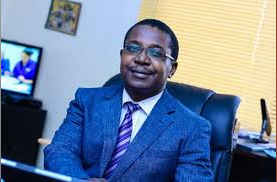
After a long two years and five months in prison, the two Ethiopian anti-poverty campaigners Daniel Bekele and Netsanet Demissie were released from prison on 28 March 2008. Daniel and Netsanet were the last two people who remained detained in the high profile treason trial that originally charged 131 journalists, politicians, and civil society leaders with a range of charges from genocide to treason. They were among thousands who were detained following protests accusing the government of rigging the 15 May 2005 parliamentary elections. Daniel, who is a Board member of ACCSL, has now been returned to his family. ICCSL and ACCSL, along with their many partners such as ActionAid, CIVICUS, etc., welcome the release of Daniel and Netsanet.
|
| |
|
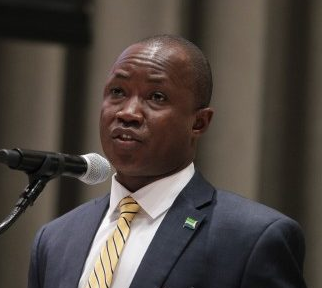
"The Future of Sudan," by Prof. Andrew S. Natsios (pictured above), the President's Special Envoy for Sudan was a speech delivered on 15 October 2007. The event was sponsored by the Military and National Security Law Students Association, in connection with the International Law Students Association, and the Center for International Social Development, all of the Catholic University of America. ICCSL was pleased to be invited to be a co-sponsor of the event.
Natsios, who is also Professor of the Practice of Diplomacy and Advisor of International Development at the Edmund A. Walsh School of Foreign Service at Georgetown University, outlined the progress made and challenges that remain in resolving the humanitarian crisis in the Darfur region of Sudan, which has been most heavily affected by 21 years of nearly unbroken internal strife. According to him, "The only solution for lasting peace in Darfur is a politically inclusive solution."
In real terms, Prof. Natsios said that political inclusion means the following:
- Participants should be realistic about the peace talks that will begin in Libya in late October. Not everyone will get everything they want.
- Rebels need to repair internal divisions and hammer out a common position before the talks. All invited rebel groups need to attend the talks.
- The violence needs to stop. Both the government and rebels have been launching incredibly damaging attacks.
- The voices of ordinary people in Darfur, tribal leaders, Arab groups, women, and others, must be included in the talks.
- The international community needs to continue to use pressure and leverage to keep the talks moving in a positive direction.
He ended by stating that the needs of the Sudanese people for peace are starkly clear. Prof. Natsios declared in conclusion that "Peace is its own dividend, but it will be difficult to achieve."
The text of Natsios speech is available at http://www.state.gov/p/af/rls/rm/93613.htm.
|
| |
|

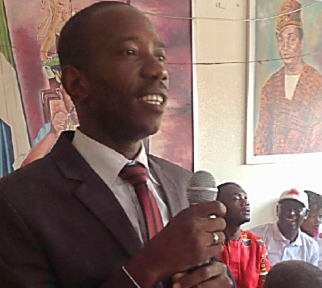
Dr. Irish with Workshop Leaders
Dr. Lee Irish has returned from Ghana and continues his work on several projects, including the Cooperatives Act, the Freedom of Information Act, the proposed District Registration Act, and the proposed "NGO" Act.
Concerning the new legal framework for NGOs, Dr. Irish met with GAPVOD (Ghana Association of Private Voluntary Organizations) as well as the Office of the Attorney General (Mr. Joe Ghartey) to discuss changes to the current legal environment for NPOs and CBOs and to develop plans for simplifying the pending legislation on charitable trusts.
|
| |
|
January 2009
Ethiopia
Repressive CSO Law Adopted
UNHCR and Amnesty International reported that the Ethiopian parliament adopted a potentially repressive new law which could criminalise the human rights activities of both foreign and domestic non-governmental organizations (NGOs).
October 2008
Ethiopia
The Ethiopian government has submitted the controversial draft legislation for Civil Society Organizations (CSO law) to the parliament. The draft has been strongly criticized as a document that criminalizes human rights activity of non-governmental organizations and seriously undermines civil society groups in Ethiopia.
June 2008
Zimbabwe - New Update June 27
The Standard reported on 22 June that war veterans and Zanu PF youth militia continue to block relief agencies and HIV and Aids service organizations from accessing areas in dire need of aid in rural and peri-urban areas. This is despite recent assurances from the government that the NGOs could resume their humanitarian operations, the national association of NGOs has said.
Zimbabwe - Clarification Issued on Suspension Order For NGOS/PVOS
The Government of Zimbabwe wrote on 13 June 2008 to all NGOs/PVOs to give clarification on the order to suspend the field operations of all NGOs/PVOs.
In a press release on its website, NANGO, the National Association
of NGOs, states that according to the letter of clarification from the Acting Permanent Secretary in the Ministry of Public Service, Labour and Social Welfare, Sidney Mhishi,
the suspension of field operations on 7 June 2008 does not imply banning or deregistration of PVOs/NGOs.
Click 'News' above for more...
|
|